
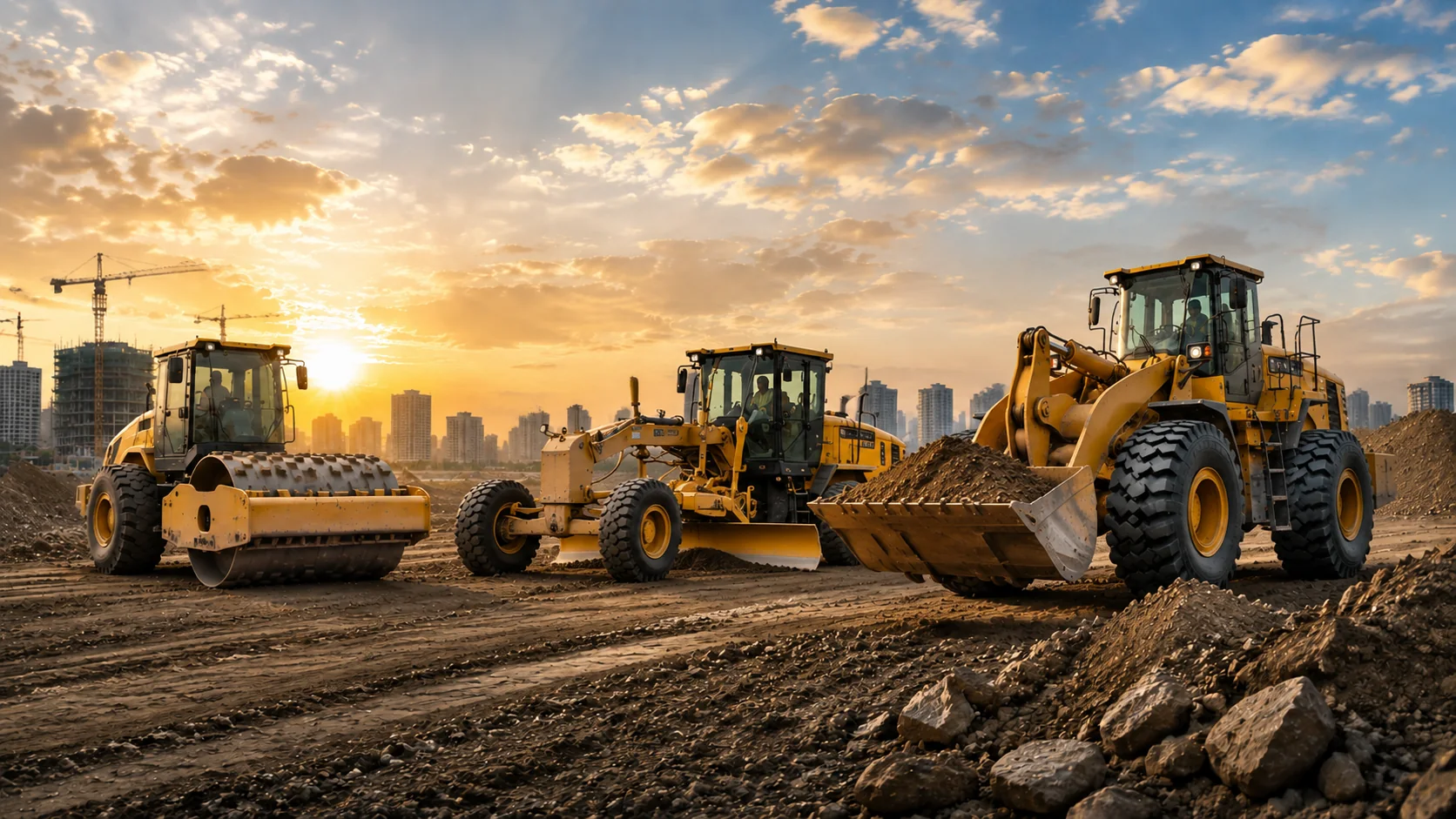
Michelin's 2026 XHA3 launch is a useful industry signal: construction fleets want tyre platforms that can cover more than one machine category without losing control of application data.
Michelin describes the XHA3 as a multi-machine design for loaders, articulated dump trucks and graders, covering E-3, L-3 and G-3 applications. The company also introduced a visual pressure-check feature. Those are manufacturer-specific statements, but the wider procurement lesson applies across brands: versatility must be supported by separate fitment and duty-cycle records for every machine.
What the 2026 launch signals
Construction fleets increasingly balance availability, inventory and machine utilisation. A common tyre platform can simplify stock planning and technician familiarity, especially when equipment moves between projects. It can also create a dangerous shortcut if the same pressure, load assumption or wear expectation is copied from one machine to another.
Michelin's launch positions versatility alongside durability, stability and pressure visibility. Earlier in 2026 the company also added a 26.5R25 L-5 loader tyre for high-capacity loaders in mines and quarries. Read together, the releases show two directions: broader multi-machine coverage for mixed construction work and more specialised deep-tread products for severe loader duty.
E-3, L-3 and G-3: orientation, not final approval
E identifies earthmover service, L identifies loader/dozer service and G identifies grader service. The “3” places the product in a conventional tread-depth family. These labels help a buyer shortlist a tyre, but they do not prove that a particular catalogue row is approved for a specific machine and axle position.
On a loader, repeated turning and face work can emphasise shoulder wear and cuts. An ADT adds loaded travel, gradients and heat-producing cycles. A grader may place more emphasis on steering, lateral stability and variable working speeds. One pattern can cover these duties only when its published specification and the real operating data overlap.
Eight inputs to record for each machine
Multi-machine fitment record
- Machine identity: manufacturer, exact model and drive configuration
- Position: steering, driven, front, rear or other approved position
- Current fitment: full sidewall marking, construction, rim and clearance
- Load: axle load, payload and material distribution
- Movement: loaded and empty speed, one-way distance and cycle time
- Surface: rock, compacted soil, mud, pavement and transitions
- Maintenance: cold-pressure target, check frequency and rim condition
- Outcome: hours, distance, tread remaining, repairs and removal cause
When a deeper tread deserves a separate review
A fleet moving from general construction work into severe face loading may consider an L-5 option. Deeper tread can support wear and protection priorities in the right cycle, but it can also alter heat behaviour. The decision should use loaded travel distance, maximum speed and surface severity rather than an assumption that deeper is always better.
Compare the catalogue-backed bias E-3/L-3 loader range, bias L-5 severe-service range, radial E-3/L-3 range and radial E-4 mining and quarry range. Each page separates the recorded configurations instead of treating the TRA code as a complete specification.
A better procurement workflow
Build one application sheet per machine type, even if the proposed tyre name is identical. Ask the supplier to identify the exact catalogue row and published load/speed condition supporting each recommendation. Then define separate cold-pressure, inspection and removal-record procedures for each fitment.
This preserves the inventory benefit of a multi-machine product while preventing assumptions from crossing between unlike equipment. It also gives fleets a cleaner basis for comparing hours, distance, cost per hour and removal causes.
Frequently asked questions
Multi-machine construction OTR tyres
Can one tyre be used on loaders, ADTs and graders?
Only where the manufacturer approves the exact size and specification for each machine, position and duty.
What is the difference between E-3, L-3 and G-3?
The letters identify application families and the number indicates a tread-depth family. The full specification still controls fitment.
Which operating data should a buyer provide?
Provide machine, position, size, rim, load, speeds, travel distance, cycle time, surface, daily hours, pressure procedure and removal cause.
Does deeper tread always mean longer service?
No. Tread depth, heat, speed, travel distance, load and surface severity must be reviewed together.
Primary sources
Source documents used
Michelin XHA3 construction-equipment tyre release, July 7, 2026