
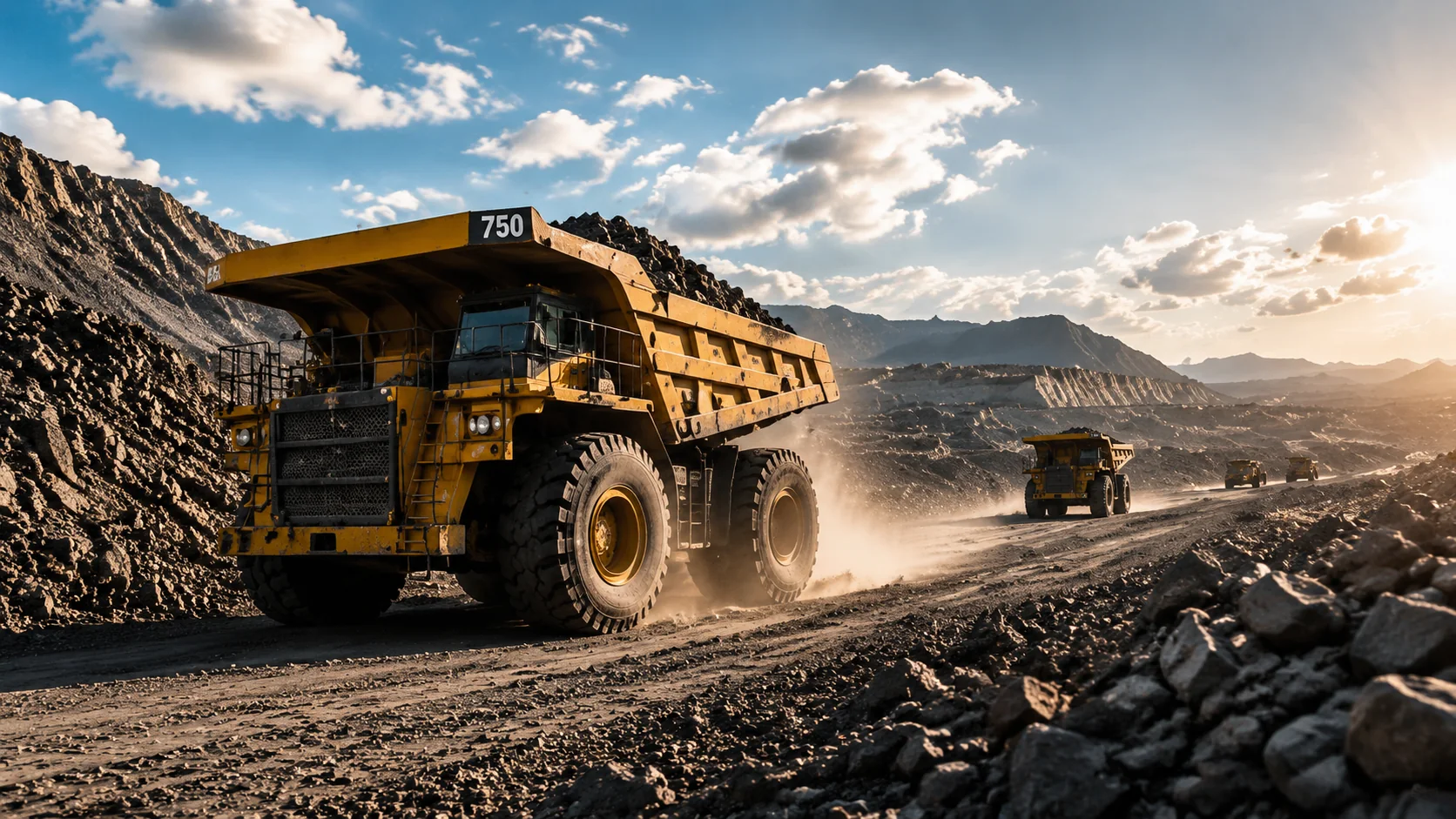
Mining tyre monitoring is moving from stand-alone pressure warnings toward combined analysis of tyre temperature, vehicle speed, location, route and site conditions.
Komatsu and Bridgestone announced field verification that exchanges Komtrax Plus vehicle data with Bridgestone iTrack tyre data. Michelin describes MEMS 4 as combining continuous pressure and temperature monitoring with GPS, severity maps and geofencing. Caterpillar's Road Analysis Control links truck motion data to specific haul-road sections. Together, these systems show the same industry direction: tyre condition makes more sense when it is connected to operating context.
What is changing in mining tyre monitoring?
Traditional checks capture a pressure reading at a point in time. Connected systems can add continuous or periodic temperature, vehicle location and speed data. When the same information is aligned with payload, road severity and maintenance records, mines can distinguish a one-off event from a recurring operational pattern.
This does not make inspection obsolete. Sensors do not identify every cut, impact break, bead issue or installation error. Their value is in showing when and where abnormal conditions developed so that technicians can inspect the correct tyre, truck or road section.
Six data signals that should be connected
Minimum useful tyre-data record
- Tyre identity: serial or fleet ID, product, size, construction and installation date
- Position: truck, axle and wheel position so repeated events can be compared
- Condition: pressure and temperature with time stamps and alert thresholds
- Operation: payload or axle load, loaded and empty speed, cycle time and idle time
- Location: route, gradient, loading area, dump point and repeated event zones
- Outcome: inspection result, corrective action, repair and final removal reason
An alert needs an operating response
A dashboard alone does not protect a tyre. Each alert level should have a documented response: who receives it, whether the truck slows or stops, where inspection occurs, which pressure procedure applies and how the action is recorded.
Temperature also needs context. A high reading after a sustained loaded climb means something different from a sensor anomaly on a parked truck. Trend review by route and position helps avoid reacting to numbers without understanding the cycle behind them.
Use tyre events to improve the haul road
Caterpillar states that Road Analysis Control can identify road sections affecting cycle time and component life, including tyres. If impact or temperature events repeatedly occur in the same location, the corrective action may involve grading, drainage, spillage removal, speed control or route design—not only a different tyre.
Pairing tyre events with road-maintenance records also makes improvement measurable. A mine can compare event frequency before and after a problem section is repaired.
How monitoring data improves the next tyre selection
Removal records give tyre buyers evidence that a quotation form alone cannot provide. Repeated heat events may point to load-speed-cycle review. Repeated impacts may shift attention to road condition, speed or casing protection. Irregular pressure history may show that maintenance discipline must improve before a new product is judged.
Use this history alongside the catalogue-backed OTR tyre range, the mining application guide and the 29.5-25 selection checklist. The aim is not to promise service life from one data point, but to build a more defensible shortlist.
Four practical KPIs for a mine tyre programme
- Alert response time: time from abnormal reading to documented inspection or operating action
- Repeat events: alerts by truck, wheel position and route section
- Removal quality: percentage of removed tyres with a verified cause and complete record
- Outcome: hours, distance or tonnes moved, always interpreted with the duty cycle
Cost per hour or tonne is useful only when the operating conditions and removal reasons are recorded consistently. Otherwise, unlike applications are being compared as if they were the same.
Frequently asked questions
Connected mining tyre monitoring
What should a mining tyre monitoring system measure?
Connect pressure and temperature with vehicle speed, load, location, route, cycle time and haul-road events. A pressure alert without operating context explains only part of the risk.
Can monitoring prevent every OTR tyre failure?
No. It can identify abnormal conditions and trends, but it cannot eliminate impacts, cuts, incorrect fitment or poor road conditions. Alerts need inspection and response rules.
How often should mining tyre data be reviewed?
Real-time alerts need immediate response rules. Trend data should also be reviewed by shift, route and tyre position to find recurring patterns.
What data should be kept at tyre removal?
Record tyre identity, machine and position, installation and removal dates, hours or distance, tread remaining, repairs, pressure history, temperature events and verified removal reason.
Primary sources
Source documents used
Komatsu and Bridgestone mining-solutions field verification